
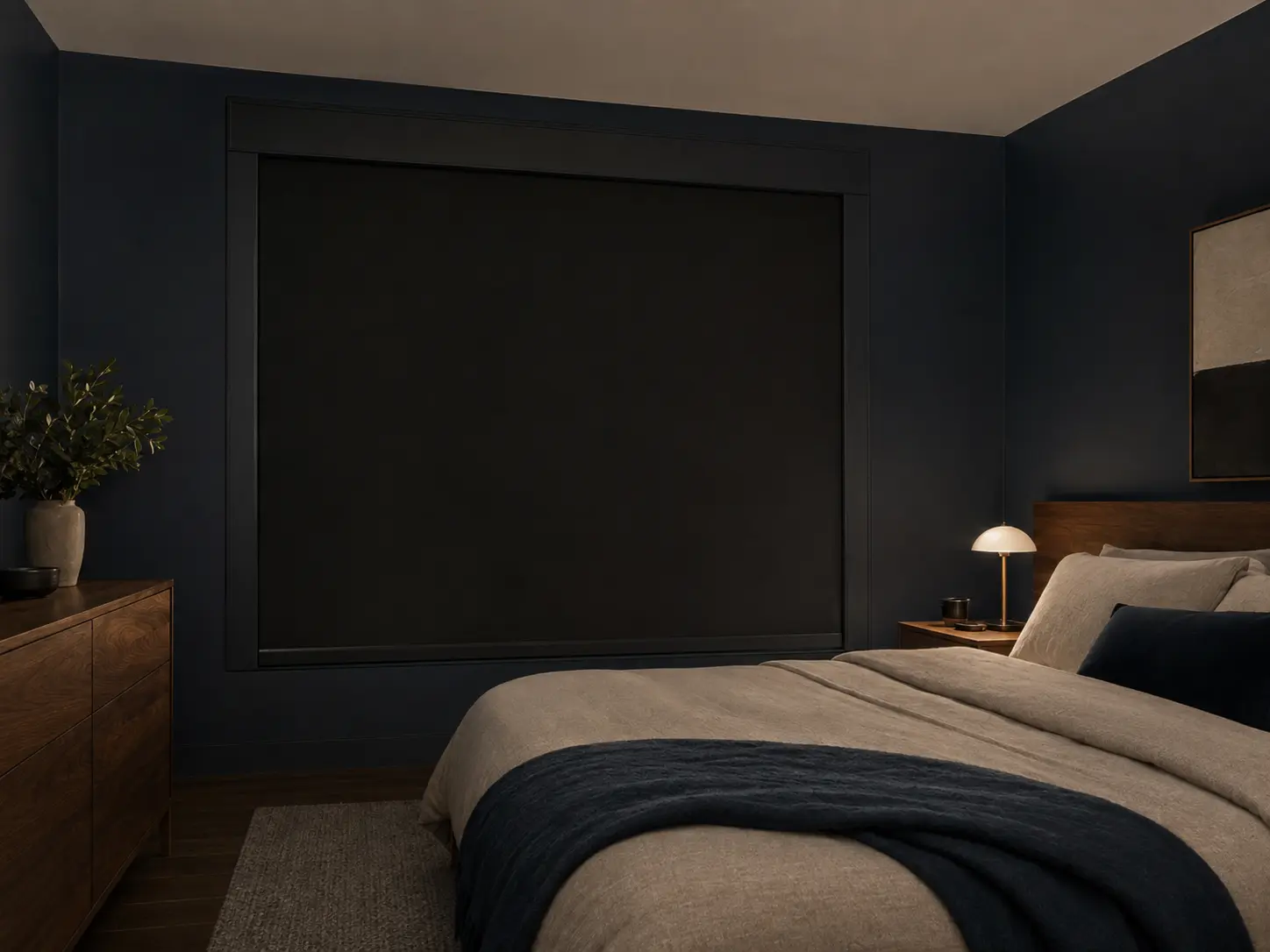
Your bedroom works a different shift
Healthcare teams, first responders, hospitality staff, transportation professionals, and other Austin workers often need to rest when the sun is strongest. A standard room-darkening shade can reduce overall brightness while still leaving sharp bands of light that draw the eye.
A professionally planned blackout system addresses both the window surface and the perimeter. The right approach depends on window depth, trim, orientation, operating hardware, and how often you need natural light when you are awake.
- Control direct Texas daylight
- Reduce the contrast created by bright edge gaps
- Build a room routine that works across rotating schedules
Why ordinary blackout shades can disappoint
Retail shades are often selected using a few basic measurements. Small allowances are needed for many inside-mounted products, and those allowances can become visible light channels. Light may also reflect from the sill, wall, or pale fabric.
A complete system may use more coverage, a different mounting position, edge channels, a cassette, overlapping materials, or a combined treatment. We explain what each choice changes before you decide.
Daytime heat and glare
Windows facing east or west can add glare and solar heat during peak sleep hours. Insulating materials may help moderate heat transfer at the glass and make the room feel more settled. Performance varies by glass, exposure, frame, and product, so we avoid one-size-fits-all energy claims.
The best solution balances darkness, ventilation access, appearance, ease of operation, and your budget—not darkness in isolation.
Designed for repeatable use
A sleep-room shade should be easy to close at the end of a shift and reopen when you want daylight. Temporary film and improvised panels may darken a room, but they can make daily use awkward or block the window continuously.
Custom window coverings preserve normal operation while giving you a cleaner architectural finish. Cordless or other operating options may be available after product confirmation.
From light check to installation
During the consultation, we review the room at the time of day that matters most when practical, locate the strongest light paths, measure the opening, and discuss realistic outcomes. We then help you select materials and mounting details appropriate to the room.
Professional installation protects the intended fit. Once installed, the covering is checked for smooth operation and visible gaps so adjustments can be addressed before the project is considered complete.