
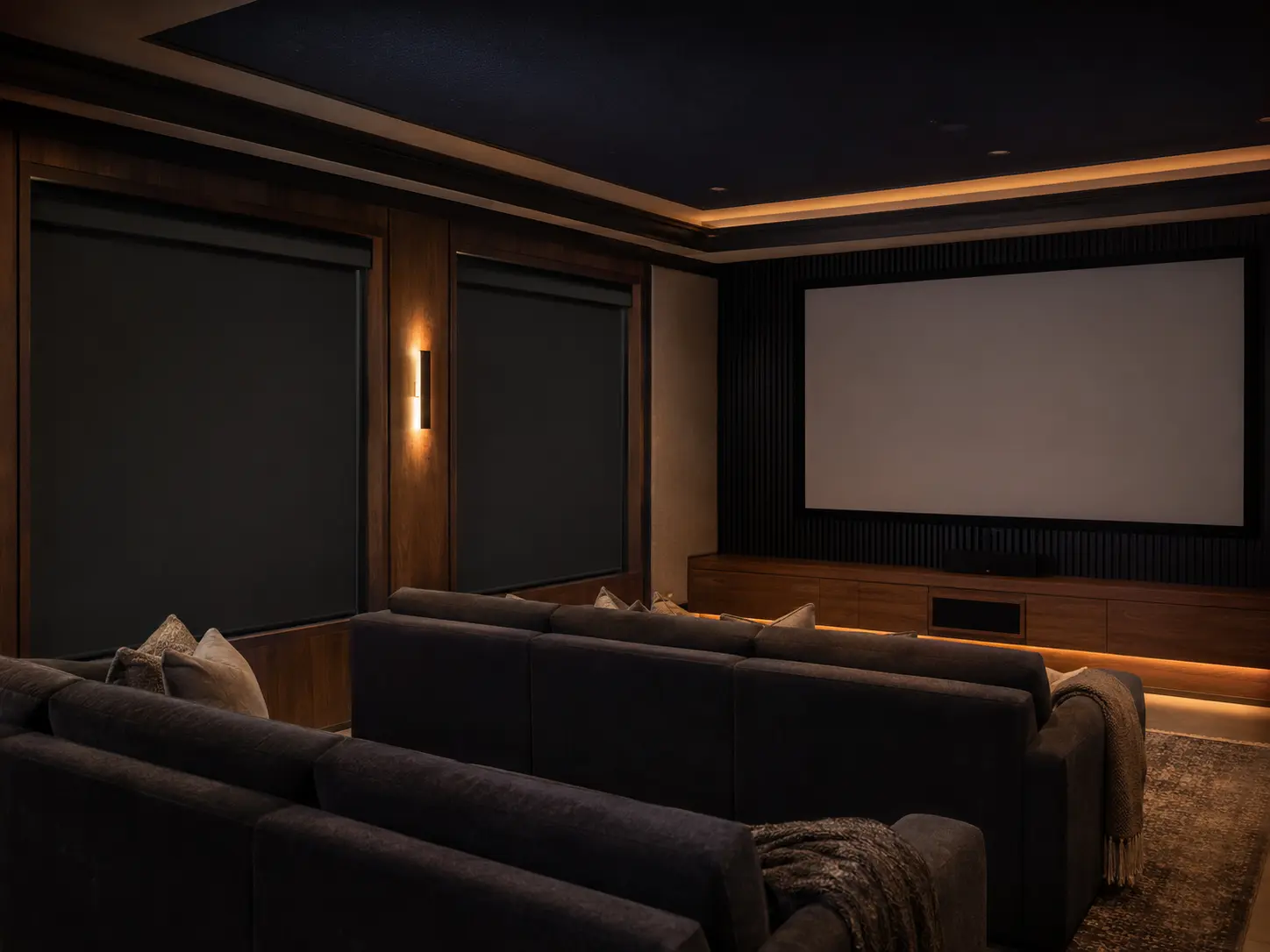
Protect the picture from Austin daylight
Projectors and reflective screens reveal even modest daylight. A shade can look dark from the doorway yet allow enough perimeter light to wash out shadow detail or create a bright reflection across the screen.
We plan around the screen position, viewing angles, window orientation, wall color, and how the room is used outside movie time. The result should support viewing without making the room awkward on an ordinary day.
- Reduce projector washout and screen glare
- Control edge-to-edge light more effectively
- Coordinate frames and fabrics with the room
Multiple windows require one plan
Media rooms often have several windows with different dimensions or exposures. Treating each opening in isolation can leave mismatched gaps and inconsistent appearance. We measure every window and consider how the coverings will read together when open and closed.
Dark fabric and frame options can visually disappear in a theater, while warmer finishes may coordinate better in a shared living space. Availability is confirmed during product selection.
A clean alternative to permanent blocking
Temporary panels, foil, and film can be effective at stopping light, but they also restrict access and can look unfinished. Custom operable coverings allow the room to return to daylight when the showing is over.
For some projects, a blind-and-curtain combination offers added flexibility. We compare the practical tradeoffs, including stack space, cleaning, wall coverage, and everyday operation.
What blackout can—and cannot—do
A fitted window treatment can meaningfully improve light control, but it is not acoustic construction. Cellular or layered materials may soften some outside sound, yet they should not be presented as complete soundproofing or theater acoustic treatment.
Similarly, motorization is included only if confirmed among the final product options. We will never promise a feature before compatibility, power, dimensions, and availability are verified.
Measured and installed for the room
Professional measuring captures frame depth, projection, obstructions, and the clearances that influence light control. We identify the most suitable mounting approach and describe any expected limitations.
During installation, the system is aligned and tested so fabric tracks correctly and the finished appearance remains intentional. A final viewing check helps confirm that the most noticeable glare paths have been addressed.